
dive-computer |
Shearwater Perdix 2 Review: The Tech Diver's Default, Earned
I've been diving the Perdix 2 most weekends for the better part of a year now — Jupiter ledges in current, the occasional deep wreck offshore, and a lot of slow, fiddly stuff at Blue Heron Bridge where the only depth that matters is twenty feet and the only number I care about is bottom time. It has been on my wrist for single-tank recreational dives, for nitrox, and for staged decompression on doubles. I bought it with my own money, and I review gear the way I shop for it: I want to know where it fails, not where the brochure says it shines.
The short version is that the Perdix 2 is the default tech-diving computer for a reason. It is boring in the best possible way. But "default" is not the same as "right for you," and there is exactly one decision most buyers actually have to make. I'll get to that.
What it is
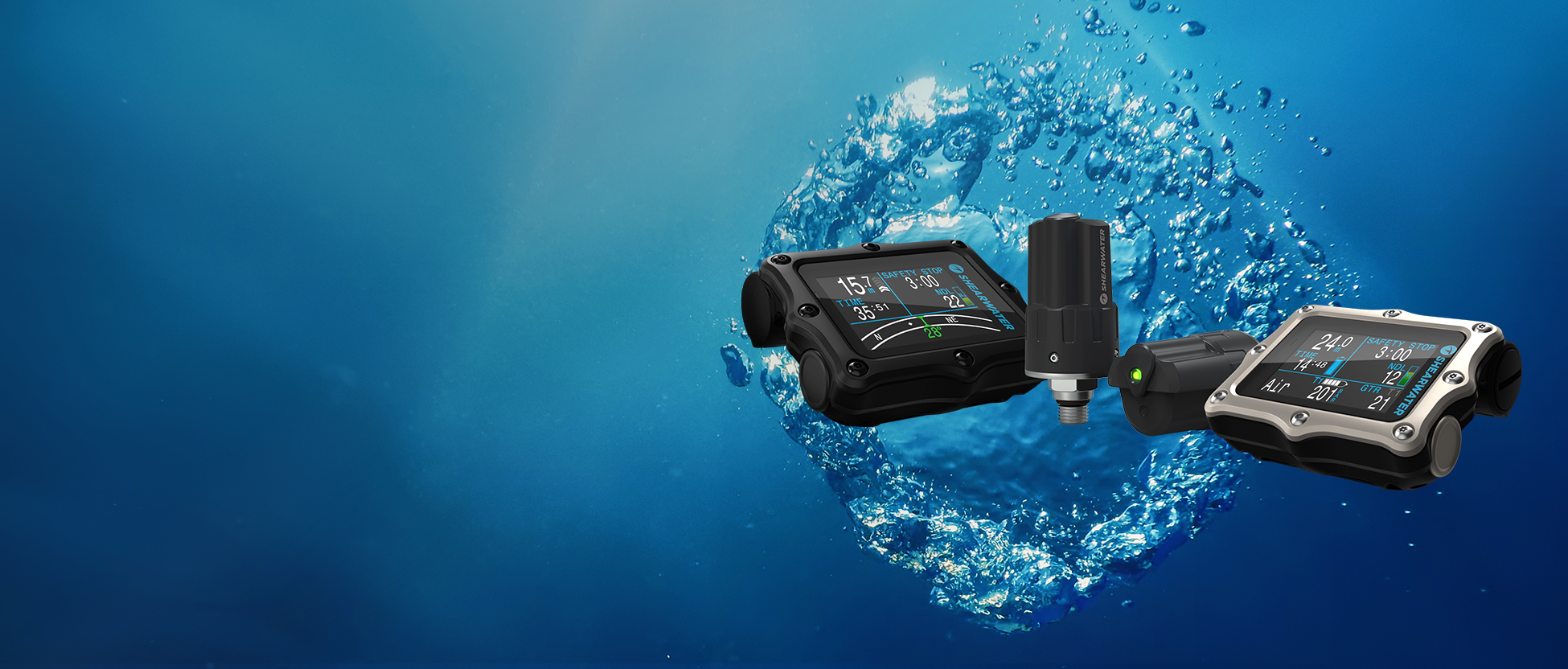
The Perdix 2 is a large wrist-mounted dive computer from Shearwater, not a watch. It is meant to be read at a glance, in bad visibility, by someone who is task-loaded. The display is a roughly 2.2-inch color screen, bright and high-contrast, and that size is the whole point of the thing. When you are hanging on a deco stop in a green Gulf Stream drift with particulate streaming past you, you can read your remaining stop time and your ascent rate without squinting or rotating your wrist into your mask.
Under the hood it runs Bühlmann ZHL-16C with Gradient Factors, which is the algorithm most technical divers expect and trust. It covers air, nitrox, trimix, gauge, and closed-circuit modes, so the same unit follows you from open-water recreational diving all the way through a CCR program without you re-learning an interface. It has a digital tilt-compensated compass, air integration that supports multiple Bluetooth transmitters, and Bluetooth for syncing your dive log and pushing firmware updates. It is powered by a single user-replaceable battery — a 3.6V cell in the common 1.5AA size — and that detail matters more than it sounds like it should.
What it does well
The display is the headline, and it earns it. Information density is high but never cluttered. The fonts are large, the colors are used sparingly and meaningfully — your ascent-rate indicator and your alarms stand out without turning the screen into a Christmas tree. I have never once been confused about what the Perdix 2 was telling me underwater, and that is a higher bar than it sounds. A lot of computers bury the number you need two button-presses deep. This one keeps the important things in front of you.
The interface logic is genuinely good. Two buttons, a clear menu structure, and a consistent mental model: one button moves, one button selects. You can run the whole thing in 5mm gloves in winter water, or in the dark, without hunting. Switching gases mid-dive — say, dropping onto a deco bottle — is fast and hard to fumble, which is exactly what you want when your hands are cold and your brain is busy.
The user-replaceable battery is the quiet hero. There is no proprietary charger, no cradle, no overnight tether. If I'm loading the truck before a dawn boat out of Riviera Beach and the battery is low, I swap a cell in under a minute and forget about it. For travel this is even better: you cannot run out of charge on a liveaboard with no outlet, and you never have to remember a specific cable. A computer you can keep alive with a battery from any gas station is a computer you can trust on a trip.
Air integration is solid and flexible. Because it supports multiple transmitters, you can monitor more than one cylinder — useful for sidemount or for keeping an eye on a stage. Pairing is straightforward and the gas-time / pressure data sits cleanly in the same readable display. I run it transmitter-equipped most of the time now, though I still keep an SPG as backup, as anyone should.
Build quality is what you'd hope for at this tier. It feels overbuilt in the way that inspires confidence, the screen has shrugged off the usual boat-deck abuse, and Shearwater's firmware support has a long track record of actually improving units that are already in the field rather than abandoning them.
Where it falls short
Let me be honest about the tradeoffs, because there are real ones.
It is big. This is a deliberate engineering choice — the screen size is the value — but it means the Perdix 2 is not something you wear to dinner. It rides high on a thin wrist and looks like exactly what it is: a piece of dive equipment. If you wanted a computer that doubles as a daily watch, this is not it, and Shearwater would tell you the same.
It only comes alive on a dive. Out of the water it is a fairly plain object. No always-on watch face worth mentioning, no fitness tracking, no notifications, none of the lifestyle features that some divers have started to expect. I consider this a feature, not a bug — I want my dive computer to be a dive computer — but if you were hoping for crossover wearable functionality, you won't find it here.
The price is real. It sits in the neighborhood of $1,300 MSRP before you add a transmitter, and a transmitter is its own additional cost. This is not an entry-level recreational purchase, and for a diver who will only ever do warm single-tank dives, it is more computer than the diving demands.
Air integration is convenience, not redundancy. A transmitter can drop signal, and a battery is a battery. None of this is unique to the Perdix 2, but if you're new to it, it's worth saying plainly: it does not replace a mechanical backup, and you should still dive like it might quit.
Compared to the Teric
This is the decision that matters, and it is almost entirely about form factor, not capability.
The Teric is Shearwater's watch-sized computer. It runs the same Bühlmann ZHL-16C with Gradient Factors, the same family of dive modes, the same air-integration ecosystem, and the same clean interface philosophy. Algorithmically and functionally, you are not choosing between a "better" and "worse" computer. You are choosing between two shapes of the same brain.
The real differences come down to three things:
- Screen size. The Perdix 2 is meaningfully larger and easier to read at a glance in poor conditions. The Teric's screen is smaller and beautiful, but it is a watch screen — fine for most diving, less commanding when you're task-loaded in current.
- Battery. The Perdix 2 takes a user-replaceable cell with no charger. The Teric is rechargeable on a magnetic cradle. The Teric's approach is tidier day to day; the Perdix 2's is more reassuring on the road and impossible to leave un-chargeable on a boat.
- Wearability. The Teric you can wear to work and out to dinner and nobody blinks. The Perdix 2 you take off when you get back to the dock.
That's the whole cross-shop. If you want one device that lives on your wrist all week and dives on weekends, and you can accept a smaller screen and a charging cradle, get the Teric. If you want the biggest, most readable display, a battery you can swap anywhere, and you don't care that it looks like dive gear, get the Perdix 2. Both are honest products. Neither choice is a mistake.
Who should buy this
The verdict is straightforward.
Buy the Perdix 2 if you are a technical diver, a CCR diver, an aspiring tech diver, or a serious recreational diver who values readability and battery independence over wearing your computer to brunch. If you do staged deco, dive doubles or sidemount, travel to dive, or just want the screen you can read fastest when things get busy, this is the right tool and it will likely be the last dive computer you need to buy for a long time.
Skip it — and look at the Teric instead — if you want a do-everything wrist device you'll wear daily, or if the bulk genuinely bothers you. And if you are a casual warm-water recreational diver who will never go past recreational limits, understand that the Perdix 2 is more capability than your diving requires; you are paying for headroom you may never use. That's a fine reason to buy it if you plan to grow into it, and a fine reason to skip it if you don't.
For me, on Jupiter weekends and the occasional deep wreck, it has been the easy default. It does its job, it doesn't ask for attention out of the water, and I've never once questioned what it was telling me at depth. In gear, that is about the highest compliment I have.