fins |
Scubapro Jet Fins Review: Fifty Years Old and Still the Right Answer
I bought my first pair of Jet Fins because the divers I respected most off Jupiter were all wearing them. Not because they looked fast, not because the marketing pushed them, but because every careful, well-trimmed diver I watched in the water seemed to be kicking the same black rubber slab. After a few hundred dives in them, I understand why. This is a fin design that is older than most of the people reading this review, and it is still the one I reach for on the boat. That deserves an honest explanation rather than nostalgia.
What it is
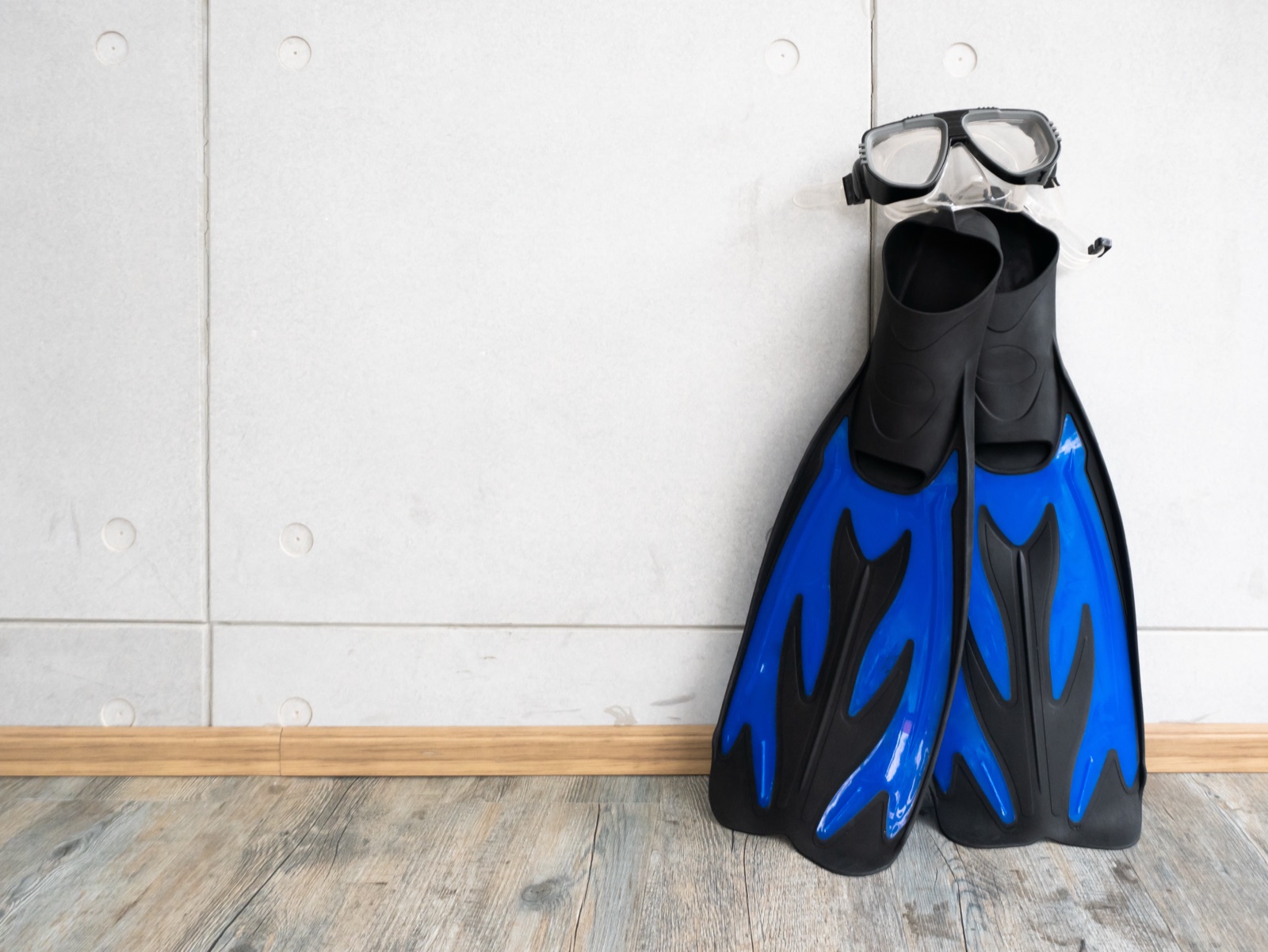
The Scubapro Jet Fin is a short, stiff, open-heel fin made of heavy vulcanized rubber. It is vented near the foot pocket, which lets water pass through on the recovery stroke and reduces the load on your legs. The blade is broad and blunt, nothing like the long, flexible paddles or the slotted split fins you see in the resort rental bins. The whole thing is built like a tool, not a fashion piece.
The defining trait is buoyancy: Jet Fins are negatively buoyant. They sink. On land this just means they are heavy. In the water it means they pull your feet down, which is the entire point for a lot of us. If you dive a drysuit, air migrates toward your feet and can float them up toward the surface in a slow, embarrassing tip-over. Negative fins are a clean mechanical fix for that. They keep your feet where they belong and make a flat, horizontal trim much easier to hold.
Most serious users swap the stock rubber strap for a bungee or spring strap. That is worth knowing up front: the spring straps are usually an aftermarket or extra-cost item, not always in the box, and they are close to mandatory for how I use these. They make donning the fins with cold or gloved hands trivial and they never fail in the unglamorous way a buckle does.
What it does well
The honest headline is control. These fins make precise, low-silt finning techniques feel natural instead of like a chore.
- Frog kick. The short stiff blade is built for it. A frog kick pushes water backward and slightly down, away from the bottom, which is exactly what you want over the silty muck at Blue Heron Bridge. I can hover and glide across a flat without stirring up a brown cloud behind me, and that keeps the viz alive for the divers I am with.
- Back kick. Backing up without turning around is one of those skills that separates tidy divers from the rest, and the Jet Fin makes it learnable. The stiffness gives you something firm to push against. With floppy fins a back kick is mush.
- Helicopter turns. Pivoting in place to face a subject or check a buddy is clean and immediate.
- Trim. Between the negative buoyancy and the short profile, your feet stay down and level. Less sculling, less wasted energy, less unintentional bottom contact.
- Durability. This is not a slogan. Vulcanized rubber does not delaminate, crack at the joints, or fatigue the way molded plastic blades do. People dive the same pair for decades and hand them down. I fully expect mine to outlast several of my regulators.
For drift diving the Atlantic side off Jupiter, where you are often hanging in moving water rather than sprinting, that control matters more than raw speed. You set your trim, you adjust your position with small efficient kicks, and you let the current do the work.
Where it falls short
I am not going to pretend these are the universal answer. They are not, and the tradeoffs are real.
- Weight. They are heavy out of the water. If you fly to your diving, a pair of these eats into your luggage allowance in a way lightweight travel fins do not. That is a genuine cost for anyone chasing trips abroad.
- Negative buoyancy cuts both ways. The same sink that helps a drysuit diver hold trim will pull the feet down on a warm-water diver in a 3mm suit or bare booties who is already nicely balanced. If your feet float, negative fins are a gift. If they do not, the fins can drag you into a slightly head-up posture you then have to fight.
- They demand leg strength. The stiff blade gives nothing back for free. New divers, or anyone with cranky knees, will feel it. The flutter sprint that a softer fin makes easy is real work in these.
- Not a sprinter. If your idea of a good dive is covering ground fast with a hard flutter, these are not built for that and you will tire.
- Plain. They are black rubber and they look like 1965. If you want color and styling, look elsewhere. I consider this a feature.
And to repeat the practical one: budget for spring straps separately. Pricing me out exactly would be guessing, so I will leave it at this, the fin plus straps is a real number and not the cheapest option on the rack. It is the longest-lived, which changes the math.
Compared to modern paddle and split fins
I have dived modern paddle fins and split fins both, and they are genuinely good at what they target. The fair comparison is about priorities, not which is objectively best.
Versus modern paddle fins
The better contemporary paddle fins are lighter, often neutral or only slightly negative, and more comfortable on a long surface swim. Many have stiffer blades than the old soft paddles and can frog kick well. What you usually give up is the indestructibility and the predictable, planted feel of solid rubber. A lot of plastic-bladed fins also float, which undoes the trim benefit a drysuit diver is after. If you dive warm water in a thin suit and travel often, a good modern paddle can be the smarter pick.
Versus split fins
Split fins are the opposite philosophy. They flutter with very little effort, they are easy on the knees, and for a relaxed warm-water diver doing flutter kicks along a reef they are comfortable and efficient at exactly that. The catch is that splits are weak at the techniques I care about most. Frog kicking, backing up, and holding a precise hover are all harder because the blade has no firm surface to push water with intent. For tech, for silt, for anywhere you need to put water exactly where you want it, splits fall down.
So the tradeoff is plain: control, durability, and frog-kick precision in one corner; flutter speed, comfort, and lightness in the other. The Jet Fin wins the first three decisively and loses the last three on purpose.
Who should buy this
Buy Jet Fins if you dive a drysuit, if you are working on or already doing tech and doubles, if you spend time in silt or current, or if you simply want to learn proper finning and be done buying fins for the next twenty years. If your feet float and you want trim, these fix it. If you value a tool that will never let you down over one that travels light, these are it.
Think twice if you are mostly a warm-water, thin-suit, fly-to-the-reef diver who flutters along happily and counts every pound of luggage. In that case a lighter neutral paddle, or even a split, may serve you better, and there is no shame in that.
The verdict: for the diving I do off Jupiter and Riviera Beach, the Scubapro Jet Fin remains the right answer. It is heavy, plain, and demanding, and it rewards all three with control and a service life that makes the price look cheap over time. Add the spring straps, commit to learning the frog kick, and these will be the last fins you think about for a very long time. Recommended without reservation for the diver they are built for.