CCR |
The Honest Cost of Getting on a CCR (and Why I Still Recommend It)
People ask me about the rebreather all the time. They ask on the boat, in the parking lot at the inlet, in the dive shop while I'm filling a diluent bottle. The question is almost always the same: what does it actually cost to get on a CCR? And almost nobody who answers gives the whole number. They quote the unit price and stop, the way someone tells you what a boat costs and conveniently forgets the slip, the fuel, the bottom paint, and the haul-out.
So here is my ledger. This is what crossing from open-circuit technical diving to a closed-circuit rebreather actually cost me over my first eighteen months on the loop, diving out of Jupiter and Riviera Beach. I'm going to keep the numbers as ballpark ranges on purpose. Your mileage varies enormously by unit, region, instructor, and how much gear you already own. I'm not handing you fabricated invoices — I'm giving you the shape of the spend so nothing surprises you. And to be very clear up front: this is one diver's experience, not training guidance and not a substitute for your instructor or your agency's standards.
The course
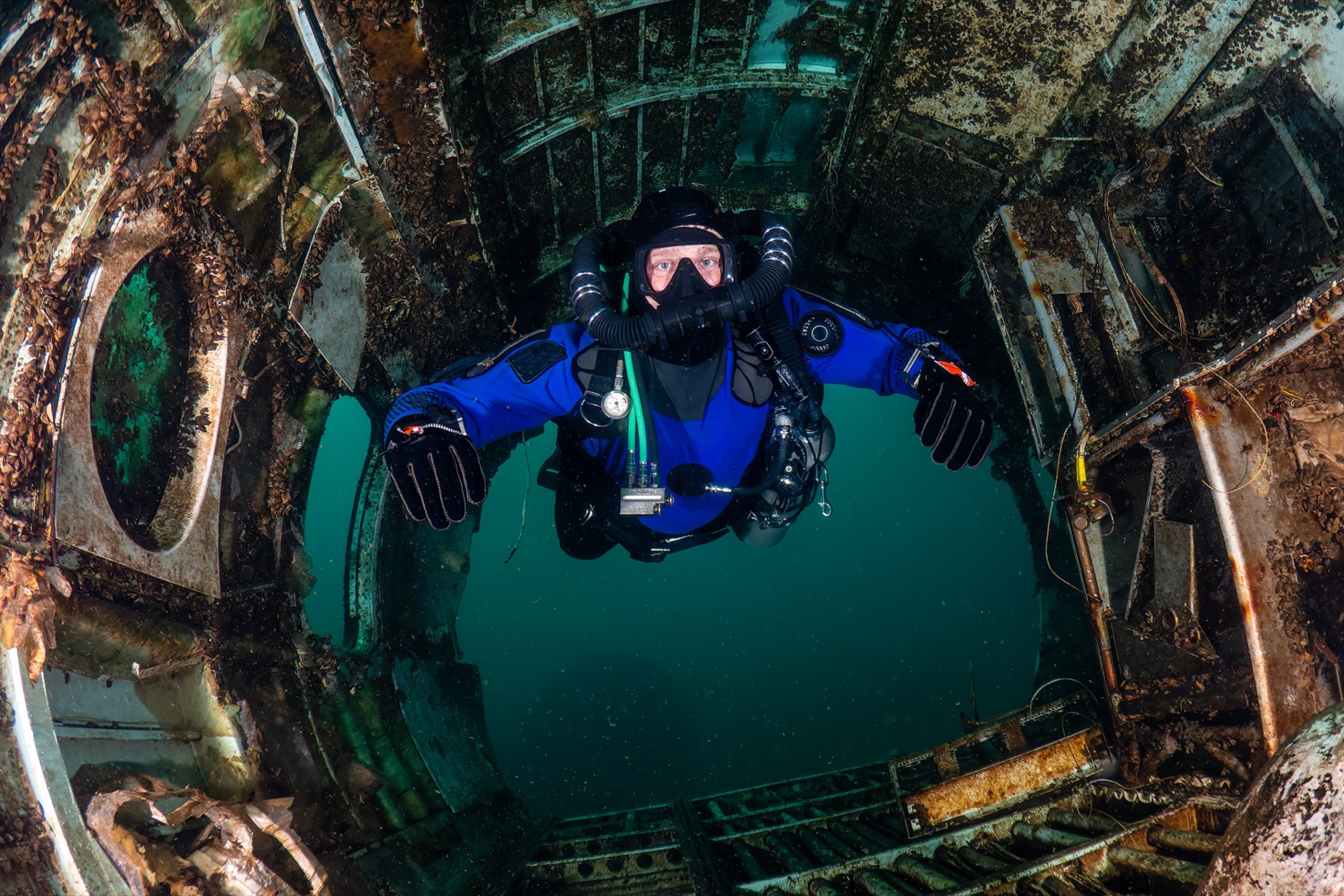
You start with a Mod 1 air-diluent CCR course. That's the entry-level rebreather certification, and it is not a weekend. Plan on several days — typically four to six — of classroom, confined work, and open-water dives, much of it spent learning to trust and verify a machine that is now breathing with you.
Course cost lands, in the ballpark of, the price of a serious open-water technical course: very roughly $1,200 to $2,500 in my region, depending on whether unit rental and gas are bundled in. If you don't own the rebreather yet, factor instructor time plus unit time. Some shops let you train on a rental and credit part of it toward a purchase. Mine didn't, and that's fine — I'd rather pay clean for the instruction.
One honest note: the course teaches you to operate the unit safely. It does not make you a fluent rebreather diver. That fluency costs hours, which I'll get to.
The unit
This is the line item everyone fixates on, and it deserves the attention. A modern electronically controlled rebreather — an eCCR — is a five-figure purchase. Depending on the model, configuration, and whether you're buying new, you're looking in the ballpark of $8,000 to $14,000 for the unit itself.
But the unit alone doesn't dive. By the time it's actually splashable you've usually added:
- Cylinders — at minimum an oxygen bottle and a diluent bottle, often small steel or aluminum, plus the valves and an oxygen-clean fill setup.
- A handset or two — primary controller plus, for most of us, an independent backup computer so you're never trusting a single display with your life.
- Bailout — open-circuit cylinders and regulators sized for your dive profile. On a rebreather you still carry enough open-circuit gas to get yourself home if the loop fails. That bailout is non-negotiable and it isn't free.
- Harness, wing, weighting, and the small stuff — onboard oxygen sensors, hoses, mouthpiece, counterlungs if not included.
Realistically, by the time my unit was dive-ready with bailout, I had spent well past the sticker price — call it another $2,000 to $5,000 on top, again wildly dependent on what you already owned from your open-circuit days. If you're coming from serious OC tech, you may already have bailout regs and bottles, which softens the blow.
Spares and sensors
Here's where the rebreather stops being a purchase and becomes a relationship. The oxygen sensors — galvanic cells that tell the unit and you how much oxygen is in the loop — are consumable. They age out. Most are rated for roughly a year to eighteen months, they're typically sold and replaced in threes, and you do not stretch them past their life because you'd rather save a few dollars. A bad cell that reads low can drive the unit to inject oxygen you don't want.
Budget cells as a recurring line, in the ballpark of $200 to $350 a year for a set, more if you swap proactively. Beyond cells:
- Oxygen-clean O-rings and parts kept on hand as spares.
- Batteries for the controller and solenoid, replaced on schedule, not on failure.
- Wear items — mouthpiece, over-pressure valve bits, hoses that get inspected and eventually retired.
None of these are large numbers individually. Collectively, treat them as a standing annual cost you simply pay to keep the machine honest. I keep a small box of spares and refuse to dive without it.
Sorb: the per-dive number
This is the line item open-circuit divers forget exists. A rebreather scrubs your exhaled carbon dioxide with a chemical absorbent — sorb. It is consumed every dive, and once it's spent, it's spent. You don't gamble on a scrubber.
Depending on your unit's canister size and how conservatively you manage scrubber duration, a fill runs you in the ballpark of $8 to $20 per dive in consumed sorb. That's a real, recurring, per-dive number you should internalize the same way you internalize the cost of a fill on open circuit — except it's there every single time, on a 40-minute reef dive in the same as on a long one. Do twenty dives a month and the sorb alone adds up to a tank of gas. It's not ruinous. It's just relentless, and you should know it's coming.
Service and the discipline tax
A rebreather is an oxygen-handling life-support machine, and it expects to be serviced like one. Plan on an annual service — sensor validation, solenoid and electronics checks, O-ring service, oxygen cleaning of the parts that touch high-O2 — as a standing yearly cost, not an occasional surprise. In my region that's in the ballpark of $300 to $600 a year depending on parts, and more in the years a sensor set or a bigger component comes due.
The oxygen-clean discipline is its own quiet tax. Everything that touches oxygen has to stay clean. That means how you store it, how you fill it, the lubricants you're allowed to use, the way you keep contaminants out. It's not expensive in dollars so much as in attention. You don't get to be casual about it, ever.
Time
The money is the part people ask about. The time is the part that actually decides whether you should do this.
Every dive on a rebreather has a build and a teardown. Before I splash, I'm assembling the unit, running positive and negative pressure checks on the loop, calibrating and verifying my cells, packing or confirming scrubber, checking my bailout. After the dive, I'm disassembling, rinsing, drying, and storing it properly. Add it up and a rebreather adds something like 30 to 60 minutes of focused work around each dive compared to grabbing a tank and going.
That's the discipline tax, and it never goes away. You don't get to skip the checklist because you're tired or the boat is leaving. The day you treat the pre-dive checks as a formality is the day the machine starts looking for a way to hurt you. A CCR is a commitment of attention, not just money. It rewards the methodical and quietly punishes the careless.
So is it worth it?
After all of that — the five figures, the sorb every dive, the cells every year, the hour of fuss around every splash — I still recommend it, for the right diver. Here's the honest payoff.
The bottom time is real. Because the loop recycles your gas and optimizes the oxygen you're breathing, your no-stop and bottom times stretch in a way open circuit simply can't match, especially deep. The gas efficiency on long and deep dives is dramatic — you're not watching a pressure gauge bleed out on every breath. You breathe warm, moist gas instead of cold, dry tank air, and on long dives that's the difference between getting out chilled and getting out comfortable.
And then there's the silence. No bubbles, no roar of an exhaust. On the Jupiter reefs in late summer, when the goliath grouper aggregate in those big, slow, prehistoric crowds, a rebreather lets you settle in among them without the bubble curtain that scatters everything. The first time a goliath the size of a refrigerator drifted up to look at me because I wasn't a noisy threat, the ledger stopped mattering. That's the payoff you can't put a number on.
But I won't pretend it's for everyone, and I'd be doing you a disservice if I sold it that way. Do not cross over if you dive occasionally. The skills and the maintenance discipline both decay fast, and an out-of-practice rebreather diver on a poorly maintained unit is in a worse place than a competent open-circuit diver. Do not cross over if you won't keep the discipline — if the checklist bores you, if you'll be tempted to stretch a scrubber or a cell to save money, if you resent the prep time. The rebreather doesn't care about your intentions. It cares about your habits.
If you're a committed diver who's already living in technical depths and times, who maintains gear like it matters, and who actually wants the long, quiet, efficient dives the machine makes possible — then yes. Pay the ledger with your eyes open and get on the loop. Just go in knowing the full number, not the sticker price, and never let the price you paid talk you out of the checklist you owe it.
One last time, because it matters: this is my experience and my opinion as one diver, not training or a standards reference. Learn the machine from a qualified instructor, follow your agency, and dive your own plan.