regulator |
Apeks XTX200 Review: A Cold-Water Workhorse in Warm Water
I dive most weekends off Jupiter and Riviera Beach, mostly in water that sits between the high 70s and mid 80s. By any reasonable accounting, I have no business owning an Apeks XTX200. It's a cold-water regulator. It's environmentally sealed against ice and grit I will almost never see in the Gulf Stream. It's heavier and pricier than what a warm-water recreational diver needs. I bought one anyway, I've put a few hundred dives on it, and I want to lay out honestly why — and where it doesn't make sense.
What it is
The XTX200 is the top of Apeks' XTX line. It pairs an overbalanced diaphragm first stage with a pneumatically balanced second stage. That combination is the whole story, so it's worth unpacking.
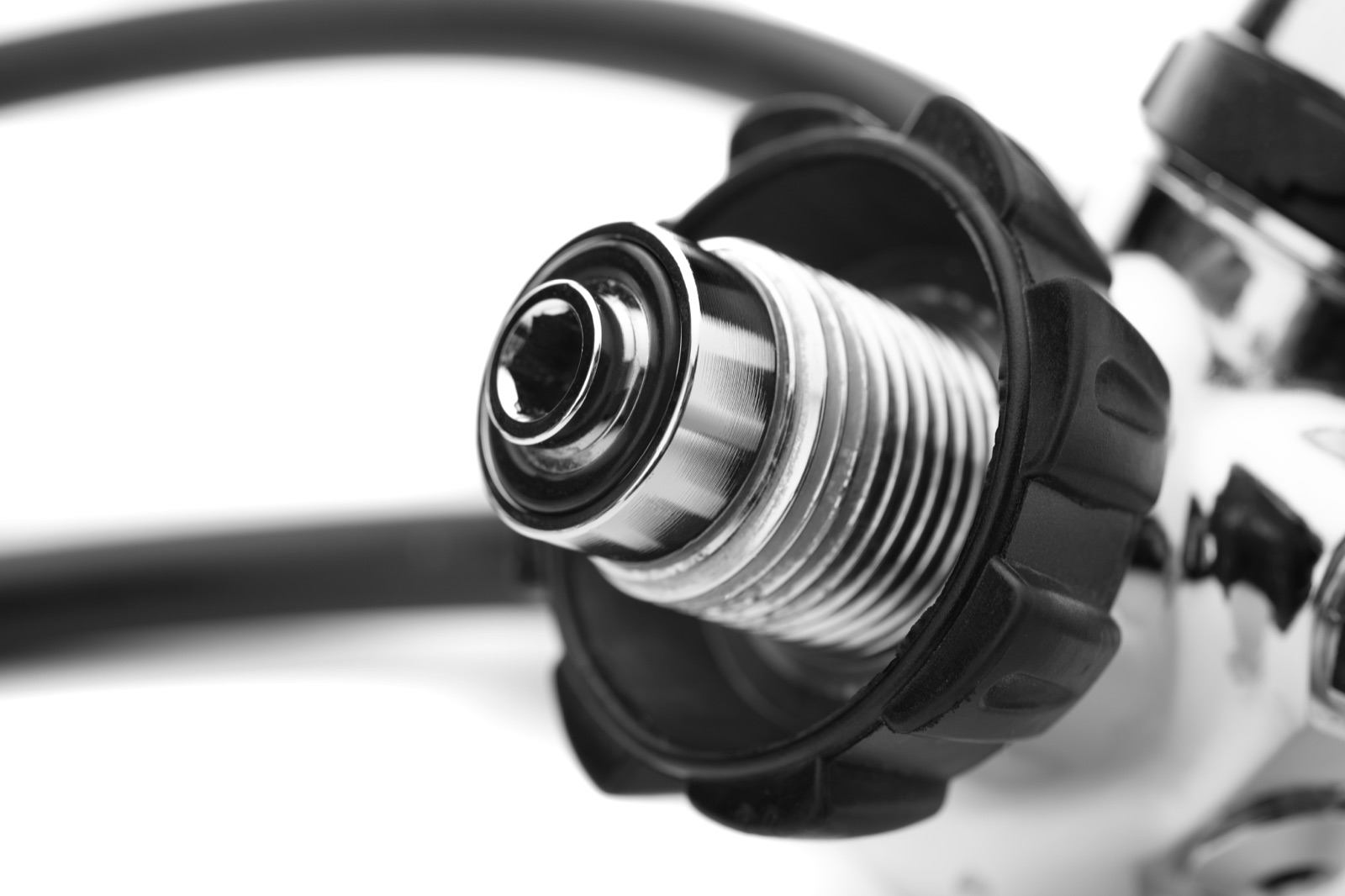
The first stage is a diaphragm design rather than a piston design. The internal mechanism is sealed off from the water entirely — the dry side of the diaphragm transmits ambient pressure through a sealed chamber instead of letting water touch the working parts. That's what makes it cold-water and ice rated: there's no path for water to get inside and freeze the mechanism. It's also why it shrugs off silt, sand, and the kind of gritty, low-viz mess you find on a bad day under the Blue Heron Bridge.
"Overbalanced" means the first stage doesn't just hold a constant intermediate pressure as you descend — it actually increases the pressure delivered to the second stage slightly faster than ambient rises with depth. The deeper you go, the more margin the second stage has to keep breathing easy. You feel it as a regulator that doesn't get noticeably stiffer at depth.
The second stage is pneumatically balanced and gives you real control. There's a cracking-resistance knob to dial how hard you have to inhale to open the valve, and a Venturi lever (Apeks marks it +/- or dive/pre-dive) that controls how aggressively airflow assists itself once it starts moving. The first stage carries twin high-pressure ports and multiple low-pressure ports, and it's available in DIN or yoke. The DIN version is the obvious pick for anything tech-leaning.
What it does well
It breathes beautifully. Open the Venturi lever and back off the cracking knob and this thing practically pushes gas at you — a high-flow, effortless breathe that doesn't fall apart when you're working. I've dragged a scooter into current on the Jupiter ledges and never once felt the regulator lag behind my demand. That's the single most important thing a regulator does, and the XTX200 does it as well as anything I've put in my mouth.
The adjustability is genuinely useful, not marketing. On a calm drift over the reef I open it all the way up and let it flow. In a strong outgoing tide at the bridge, where a wide-open Venturi can free-flow if you turn your head wrong, I dial the lever back and tighten the knob a touch. Same regulator, two completely different personalities. Most warm-water regs give you a fixed breathe and that's that.
Then there's the build. This is an overbuilt regulator in the best sense — solid, dense, no flex anywhere, the kind of hardware that feels like it will outlive me. The serviceability is the quiet headline. Apeks regs are a known quantity to any competent technician, parts are standard across the line, and the design is friendly to rebuild. For a working diver who logs real hours, a regulator that's easy and predictable to service is worth more than a few grams of weight savings.
The port layout deserves a mention too. Twin HP ports let me run a transmitter and a brass-and-glass SPG without compromise, and the LP port count and angling make for a clean hose routing whether I'm in a recreational single-tank setup or hanging it off a tech rig.
Where it falls short
I'll be blunt: for the diving I actually do, most of this regulator is overkill.
- The cold-water engineering is wasted on me. Environmental sealing against freezing matters in 40°F quarry water and under ice. In 82°F Gulf Stream water it does nothing I'll ever notice. I'm paying for — and carrying — capability I don't use.
- It's heavy. A diaphragm first stage with all that sealed hardware is denser than a comparable warm-water reg. On a long surface swim or when you're hauling gear down a dock at the bridge, you feel it. It's not punishing, but it's there.
- It's expensive. You're at the premium end of the price range, and a chunk of that premium buys cold-water performance a Florida-only diver will never cash in.
- Service routes through the Apeks dealer network. That's a strength for reliability and a mild inconvenience for logistics — you want a shop that actually stocks Apeks kits and knows the line. In South Florida that's not hard, but it's worth confirming before you buy, wherever you are.
None of these are flaws in the regulator. They're mismatches between the regulator and a warm-water use case. The XTX200 is doing exactly what it was built to do; it just wasn't built primarily for me.
Compared to the Scubapro MK25/S620
This is the comparison that matters, because the MK25 paired with an S620 second stage is the obvious alternative and, honestly, the more rational warm-water choice for a lot of divers.
The core difference is first-stage architecture. The MK25 is a balanced piston design; the XTX200 first stage is a sealed, overbalanced diaphragm. The piston Scubapro is famous for enormous, immediate gas delivery — it flows like a fire hose and feels incredibly free. It's also a simpler, lighter mechanism. The tradeoff is that a traditional piston first stage exposes more of its working parts to the water, which is why piston regs have historically been the ones with cold-water caveats, while sealed diaphragm regs own the ice-diving and silty-cave reputation.
In warm, clean water, both breathe superbly and you'd be hard-pressed to feel a meaningful difference at recreational depths. The S620 second stage is excellent and adjustable in its own right. So the choice comes down to philosophy:
- If you dive only warm, clean water and want the lightest, freest-breathing premium reg, the MK25/S620 is arguably the smarter buy. You're not paying for sealing you don't need.
- If you want one regulator that handles everything — warm reef today, a cold spring or a silt-out cave or a cold-water trip next year — the sealed diaphragm XTX200 buys you a margin the piston design doesn't, at the cost of weight and price.
It's piston simplicity and raw flow versus diaphragm sealing and do-anything range. Neither is wrong. They're answers to different questions.
Who should buy this
Buy the XTX200 if you're tech-leaning, cold-water-curious, or you simply want one rugged, fully serviceable regulator that will never be the limiting factor in any dive you'll plausibly do — and you don't mind paying for and carrying capability you may not use every weekend.
If you are a pure warm-water recreational diver and you'll never leave the Gulf Stream, be honest with yourself: a lighter, cheaper premium reg like the MK25/S620 will breathe just as well on the reef and won't make you pay for ice ratings. There's no shame in buying the right tool for the water you actually dive.
My verdict: the XTX200 is overkill for warm Florida water, and I dive it anyway — because I'd rather own one overbuilt, sealed, endlessly serviceable regulator that covers every dive I might ever do than buy a second reg the day my diving gets colder or dirtier. If you think the same way, it's an easy recommendation. If you don't, buy lighter and save the money. Either answer is defensible; just pick it with your eyes open.